Why Being the Smartest Person Hurts Your Career
Read time: 5 minutes / Subscribe to this newsletter
At some point in our careers, we’ve all had to work with “that guy.”
You know, the one who annoys the shit out of us. Mostly because he thinks he’s smarter than most people.
There’s different flavors of that guy. Like the “contrarian” who always objects to our boring and mainstream thinking.
Or the “fact checker” who is using data and analytics to correct our misinformed opinion.
My personal favorite is the “one upper” who wants us to know he has more information. More insight. More experience.
It’s no surprise, we’re unimpressed. And bothered. And annoyed.
It’s a great reminder to all of us to not be that guy… but despite our best effort, we fall into the same trap.
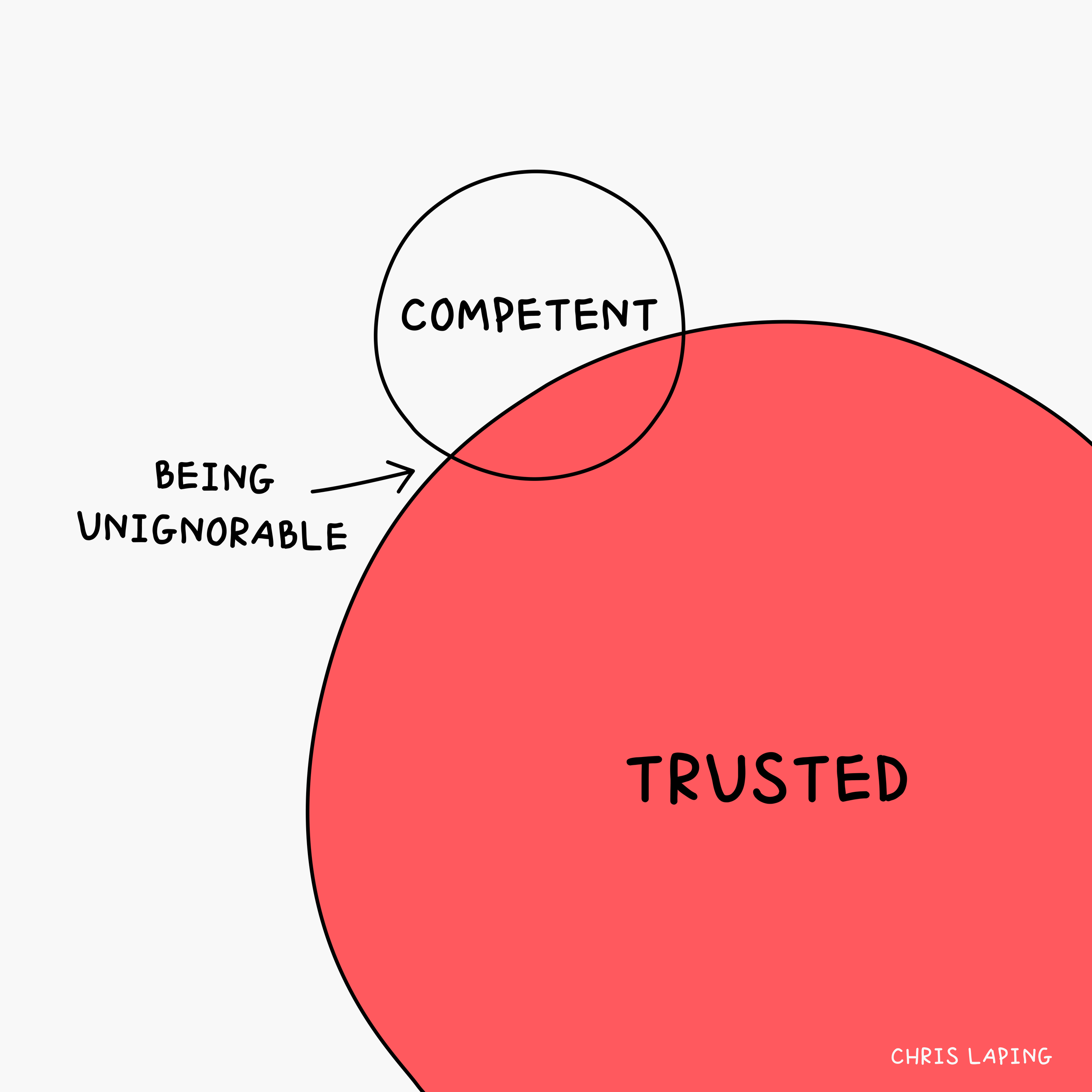
We become so eager to impress people with our competence that we actually miss a much bigger opportunity: to build our influence through a high-trust relationship.
When we interact with people in our work, they are asking two questions about us:
Do they know what they’re talking about?
And do I trust them?
Most of us obsess over the first question. So we lead with our credentials. Stack certifications. Bolster our hard skills.
And… we talk too much! Talk, talk, talk. Just to prove our value to a room full of clients or coworkers.
But influence lives in the second question. Trust isn’t built by being the smartest person in the room. It’s built through how people experience you.
Here are three things that shape trust:
1. Your Energy
Your emotional presence and attitude sets the tone for everything that’s possible. Are you easy to work with or do people brace themselves before engaging?
Why it matters: This goes without saying… no one likes an asshole. Yes, we all have bad days and moments we wish we could have back. But if we’re approachable and present more times than not, people want to work with us. Not around us.
Try this: There’s a simple five word phrase that’s psychologically powerful for your stakeholders and customers: I can help with that. Even when it’s tough, use it as much as you can. I promise you, people will open up.
2. Your Words
Do you create clarity or do people have to decode your messages afterward? Insider language and jargon monoxide creates walls between you and others.
Why it matters: Studies on “processing fluency” show that when a message is hard to mentally process (because of technical jargon or unnecessarily complex language), people like it less, trust it less, and rate the source as less credible.
Try this: Use the “Grandma Test.” If you couldn’t explain your point to your grandmother in plain language, you haven’t clarified it enough. Before hitting send on your next email or ending your next meeting, ask yourself: Could someone who knows nothing about this topic understand what I’m asking? Then add one clear line at the end: Here’s what I need from you or Here’s what happens next. Make it impossible to misunderstand.
3. Your Systems
Do you remove friction or add unnecessary steps to simple requests? Even with the best attitude and clearest communication, if your process feels like navigating a maze, people will avoid you.
Why it matters: Most friction isn’t malicious, it’s just neglect. The form that doesn’t auto-save. The workflow that requires three approvals but never explains why. When people have to burn calories just to work with you, they’ll find ways to go around you. Even when they need you.
Try this: Pick one thing you own this week. It could be a form, a meeting structure, an approval process, or a shared tool. Ask someone who actually uses it: Where do you get stuck? or What’s the most annoying part of this? Then fix that one thing before adding anything new.
Your Unignorable Move
Being the smartest person in the room isn’t a good look. And if it’s true? It’s probably bad for your career.
High-trust influence doesn't come from knowing more than everyone else. It comes from making others feel valued, understood, and capable of doing great work.
So this week, pick one: Your energy. Your words. Your systems.
Fix just one thing. Don’t be the person people brace for and become the person they turn to.
Your coach,
Chris
P.S. The high interest in my 5-week live cohort in January was so encouraging. Thank you! That said, I decided to postpone until February because activities for the new book are heating up. I love you guys and your continued support!