PowerPoint is Killing Your Ideas
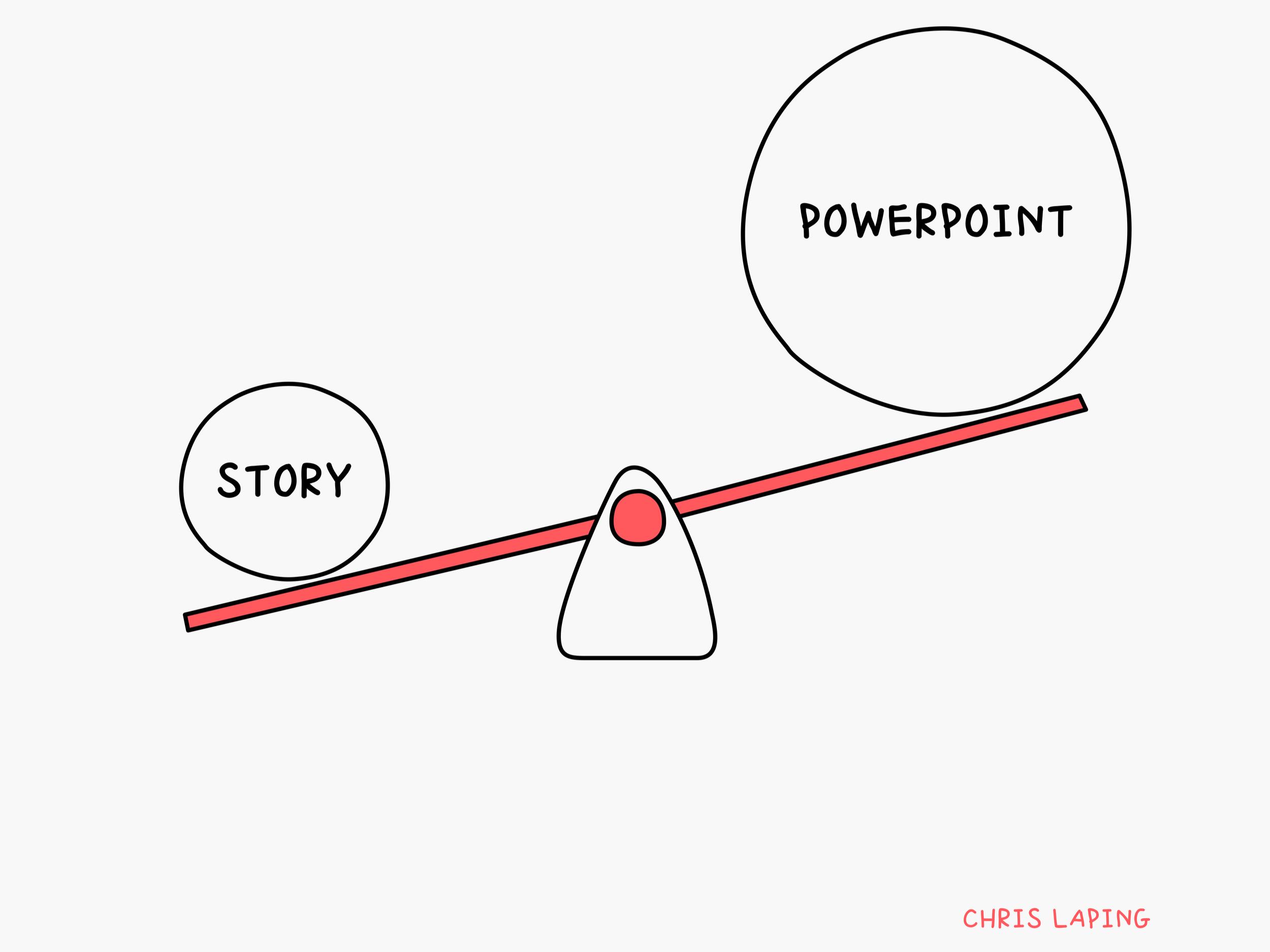
Read time: 5 minutes / Subscribe to this newsletter
“Chris, I have a high stakes meeting next week, and I’m shitting myself.”
That’s how the call started. Sheer panic.
He was a new client. Contributor level role. But every time he had to present to senior leaders, he froze.
He muted himself on calls. Deleted emails before sending. Sat quietly in meetings even when he knew the answer. Then watched others get credit for ideas he’d had six months earlier.
The cost? Missed promotions. Ideas dying in his head. And the creeping belief he didn’t belong in those rooms.
But here’s the truth: He was talented. His ideas could genuinely help his organization. The problem wasn’t his capability.
It was how he was showing up.
We immediately attacked his nervousness around presentations. And I’m going to guide you through the approach we used.
By the end of this email, you’ll have a three-part framework for selling your ideas without slides. No 47-page deck. Just story, clarity, and the courage to make people feel what you feel.
I call it The See-Feel-Do Method because influential presenters help people see the problem, feel why it matters, and believe they can do something about it.
1. Punchlines First (See)
Whether you’re in front of a board, executive team, or in a one-to-one with your boss, don't make them work to see what you see. Grip them with your ask right from the start.
Why it matters: When people don't know where you’re going, they spend the entire presentation building a case against you. The voice in their head says, “Don’t get excited. This will probably cost a fortune.”
Try this: Drop your punchline in the first 10 seconds.
“I’m here because I need approval to spend $2M to fix a problem hurting our people. Let me show you what I'm seeing.”
When you lead with the ask, you turn a pitch into a conversation. They stop defending and start listening.
2. Tell a Day-in-the-Life Story (Feel)
After the punchline, jump right into a story. Data doesn’t move people. Stories do.
Why it matters: Spreadsheets activate the analytical brain. People poke holes and stay detached. You need them to feel the problem, not just understand it.
Try this: Pick one person. One struggle. One moment that reveals why your idea matters.
“Let me tell you about Sarah at Southcenter. She’s been with us for seven years. During that time, she’s never had breakfast with her kids on school days. As a single mother, she’s had to employ a nanny who arrives in the early morning.
Why? Because she has to be in the store at 5:30 AM to be ready for an 11 AM opening. General Managers shouldn’t have to choose between their families and running a successful shift. But because of our manual pen-and-paper systems, it’s the only way.
Sarah’s career here will be ending soon if we don’t fix this."
One story. One name. Suddenly, it’s not about overhead costs. It’s about fixing something that’s breaking real people.
Be clear. Not clever. Your story doesn’t have to be fantastical. It just needs to pick a scab in a direct way.
3. Make Them the Hero (Do)
Here’s where most people blow it: They position themselves as the savior riding in on a white horse with the perfect solution.
Why it matters: When you act like the all-knowing expert, you force people to accept you as their hero. That creates resistance. Nobody wants to be rescued. They want to be the ones who solve the problem.
Try this: Hand them the cape. Make your audience responsible for the outcome.
“Sarah needs your help. One of the things she loves about working here is the culture you and the management team have nurtured over the years. She needs your support and guidance more than ever.”
When you make your audience the hero, something shifts. They stop evaluating your idea and start improving it. They add their fingerprints. They become invested in making it work because now it’s their responsibility to fix what’s broken.
If your solution isn’t quite right, they’ll enlighten you. They’ll strengthen it. They become co-creators instead of critics.
That’s what you want.
Your Unignorable Move
Before your next big presentation, close your laptop. Step away from the slides. Answer these three questions instead:
What’s my punchline? (Can I say it in one sentence?)
Who’s my Sarah? (One person whose struggle makes this real.)
Why does my audience need to be the hero? (What can only they fix?)
Write those down. Lead with them. Watch what happens when you stop hiding behind presentations and start connecting through story.
My client did. He walked into that meeting without slides. Just a clear ask, a story about a specific employee struggling with their outdated system, and a genuine invitation for leadership to help solve it.
He didn’t get loud. He didn’t become someone he’s not. He just stopped letting PowerPoint build walls between him and his audience.
Your coach,
Chris
P.S. Want the full Unlearning Playbook (plus the other four behaviors that make you unignorable)? My new book drops soon. Join the waitlist here and you'll be the first to know when it's available. Plus get an exclusive chapter preview that doesn't go to anyone else.