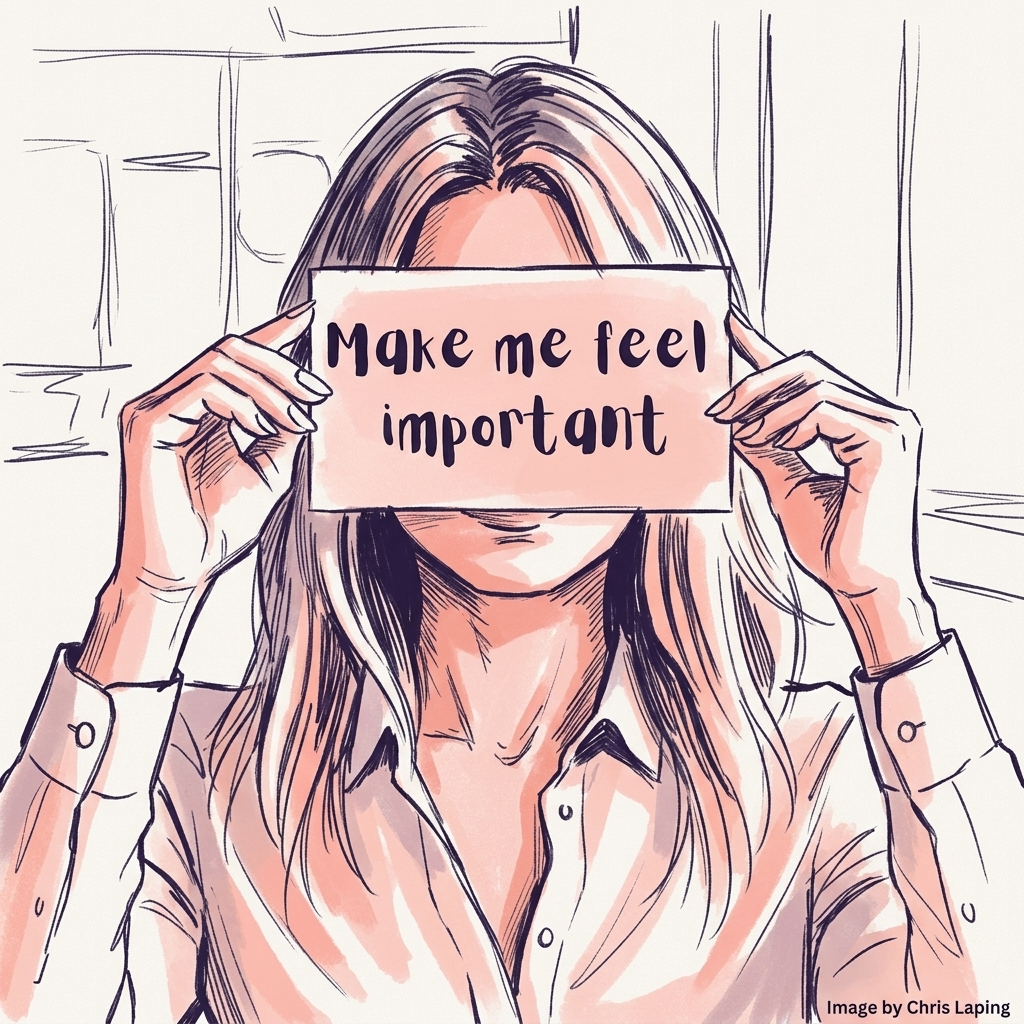
“Make me feel important.”
Read time: 4 minutes / Subscribe to this newsletter
Hello Friend!
When I was young in my C-level career, I felt lost in the corporate machine.
I was supposed to be confident and “just know” where to lead the business and our employees. Honestly, I didn’t feel that way at all.
Thank goodness for Lloyd.
He was a legend in our industry, and we were lucky to have him on our Board. His reputation was enormous, but he was also incredibly humble.
I remember sitting across from him in one of my first Board meetings. My mission was simple: give a quick update on a strategic initiative I was leading and ask for the Board’s feedback.
I wanted to seem confident. Competent. In control. But deep down inside, I struggled to know if I really belonged in the room.
Lloyd noticed.
When my update was over, I got some meaningful feedback. Lloyd went last. He smiled at me and said, “Chris, we’re so happy you’re on our team. Thank you for your thoughtful update and for caring so much about our employees.”
After the meeting concluded, we all headed to dinner. Lloyd approached me and asked, “Do you mind me hitching a ride with you?” His earlier encouragement still ringing in my head, I couldn’t hide my enthusiasm. “I would love that, Lloyd!”
Nothing about that car ride was awkward, even though we were new to each other. He asked me questions about my family. Where I was from. And what I really wanted most in my life.
I asked him many of the same questions. In 10 minutes, I felt fully comfortable with Lloyd. So much so, I confessed.
“Lloyd, I have to be honest with you. I’m suffering from imposter syndrome. Everyone on the Board is so smart, and I just hope I don’t let anyone down.”
Even though we were shoulder to shoulder in the car, I could feel him listening intently and that he really cared what I was saying.
“Chris, everyone you see is walking around with an imaginary sign on their forehead. And it reads, ‘Make me feel important.’ We don’t need you to be the smartest. Just make sure your employees know they’re important, and you’ll do just fine.”
Lloyd was right.
People want to be noticed. They want you to notice them as a human being. They want you to notice when they need help. They want you to notice when systemic issues are daily roadblocks.
Why?
Because next to no one is. They’re treated as a transaction. Or like a service ticket. Or like a work order.
They talk to people who are staring at their screens as they interact with them. The people paid to help them hurry them. And this is happening every single day.
In my forthcoming book, Unignorable, I talk about an important behavior that changes how people experience you, called Be a Serial Wonderer. It’s about the power of noticing. It works for leaders. For individual contributors. For entrepreneurs.
It’s incredibly simple and psychologically potent. Yet when we get caught on autopilot and hurry around, our ability to notice is one of the first things to go.
Most of us don’t feel heard at work. Really heard. And half of us feel misunderstood. We’re smart, capable people but often feel ignored.
This is our opportunity to do something different. To pause a beat and really notice the human being standing in front of us at work. Or to notice when they’re struggling with a problem. To proactively say, “I can help with that.”
And if you yourself don’t feel heard or understood, don’t get louder. Don’t performatively prove you’re competent and confident. Instead, notice them first.
As Lloyd reminded me, people aren’t looking for you to be interesting or smart. They’re looking for you to be interested and make them feel important. You can do that by deliberately noticing.
It’ll help other humans. And it’ll help you.
Your coach,
Chris
P.S. Be a Serial Wonderer is one of five behaviors that build trust and make us Unignorable. Want to see how you naturally score on this one and the other four behaviors? I built a 3-minute diagnostic called the Unignorable Index that’s a companion to my forthcoming book. It's free. And it's yours. Get started here.