Two Machines. One Question. Everything Changed.
Read time: 4 minutes / Subscribe to this newsletter
You probably walked past a vending machine this week.
But here’s what you didn’t notice: whether there was one machine or two.
Turns out, it matters more than you think.
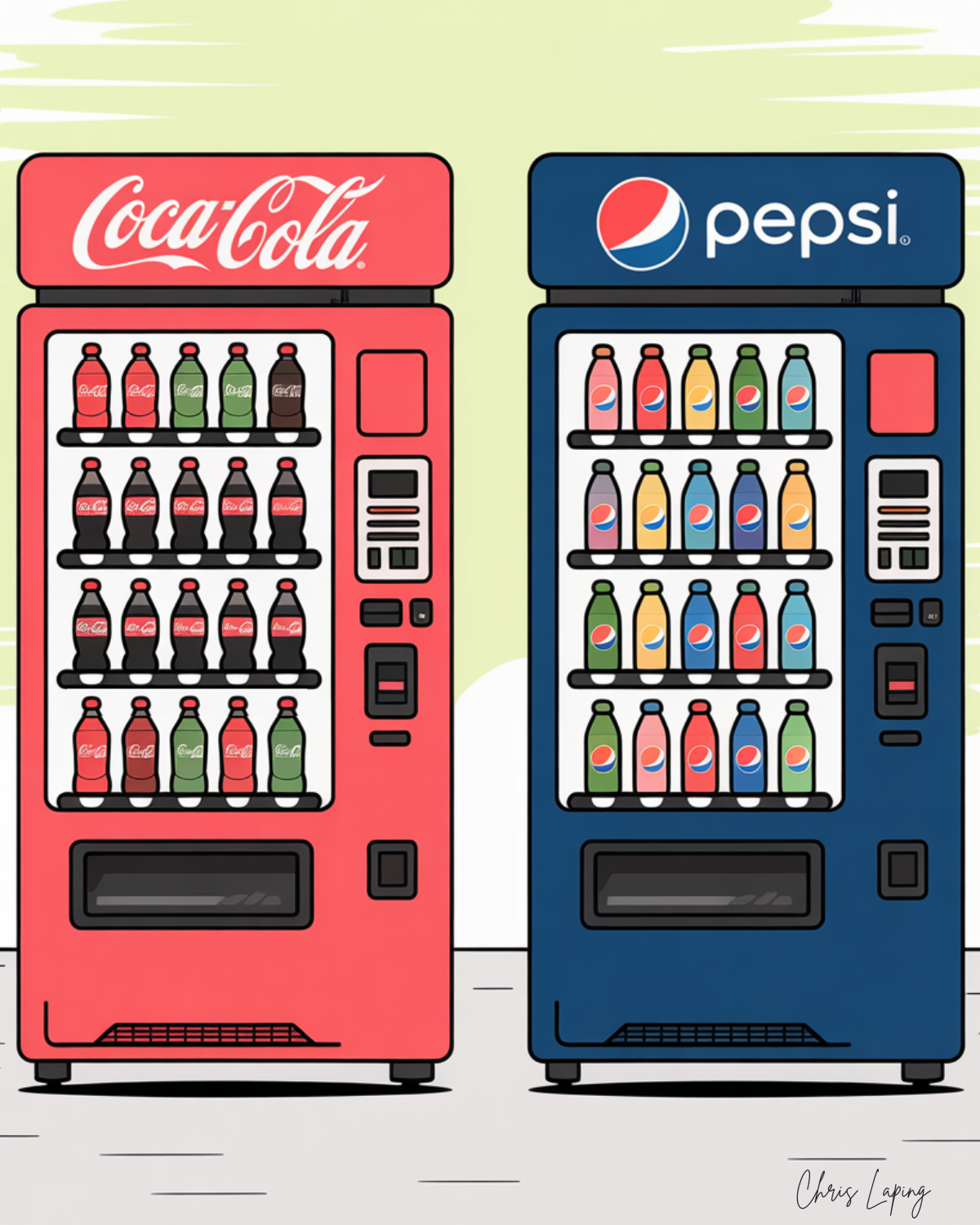
There’s a story, backed by behavioral science, about what happened when a lone Coke machine suddenly got a Pepsi neighbor. Sales went up. For both brands.
Not because people were suddenly thirstier.
Because the question changed.
From “Do I want a drink?” to “Which one do I want?”
That shift—from yes-or-no to choosing between options—isn’t just about soda. It’s about how humans actually make decisions. And if you’re trying to get your ideas heard, trusted, and followed at work, this changes everything.
The Problem With Yes-or-No
Most people present their ideas like this:
“Do you agree with my idea, yes or no?”
They put a single option on the table. They advocate hard for it. They wait for approval.
And then... nothing happens.
Here’s why: A yes-or-no question feels like a test. It puts people on the spot. It forces them to judge your idea instead of engaging with it. And when judgment is the frame, people default to caution.
You think you’re making it easier on them by narrowing it down to one choice. You’re actually making it harder.
High-Trust People Present Differently
They don’t ask for approval. They invite collaboration.
Instead of: “Do you agree with my idea, yes or no?”
They say: “Here are a few ideas… what do you think?”
Notice what just happened? You shifted the question from evaluation to exploration. From defending your idea to discovering their preferences.
Recent research on decision framing confirms this: how a choice is framed has a strong effect on people’s decisions. Even when the underlying options are identical. When the question was framed as “accept or reject,” people made very different choices than when it was framed as “choose between options.”
The frame matters as much as the content.
But Don’t Give Them Too Many
Before you create a 47-slide deck with every possible variation, stop.
Too much choice overwhelms people. Research shows that while some real choice supports autonomy and motivation, too many options can paralyze people. The sweet spot? Meaningful, limited options. Not endless choice.
Constraint creates clarity.
In practice? Two to four well-considered options usually does it.
Try This
Next time you’re presenting an idea, resist the urge to advocate for one perfect solution.
Instead, frame it as a choice between a few good paths:
“I see three ways we could approach this. Option A focuses on speed, Option B prioritizes quality, and Option C splits the difference. What feels right to you?”
“We could either move forward with the full rollout or pilot it in one region first. Which would give you more confidence?”
Notice what you’re not saying: “Here's what we should do.” “Do you approve this?” “Yes or no?”
You’re creating space for them to choose. And when they choose, they own it. When they own it, your idea moves.
Why This Works
Trust isn’t built by being right.
It’s built by making people feel safe participating in your thinking.
When you give someone a real choice (limited, thoughtful options that respect their judgment), you're inviting them into the decision. You’re saying, “I trust your perspective. I need your input. This only works if you’re in.”
That invitation changes the question. From “Do I agree with you?” to “Which path do we take together?”
Your Unignorable Move
This week, take one idea you’ve been trying to push through and reframe it as a choice between two or three options. Don’t ask for approval. Ask for preference.
The Pepsi machine didn’t make the Coke machine wrong. It just made choosing easier.
Your coach,
Chris