You Shouldn't Have To Be the Loudest Person To Be Heard
Read time: 4 minutes / Subscribe to this newsletter
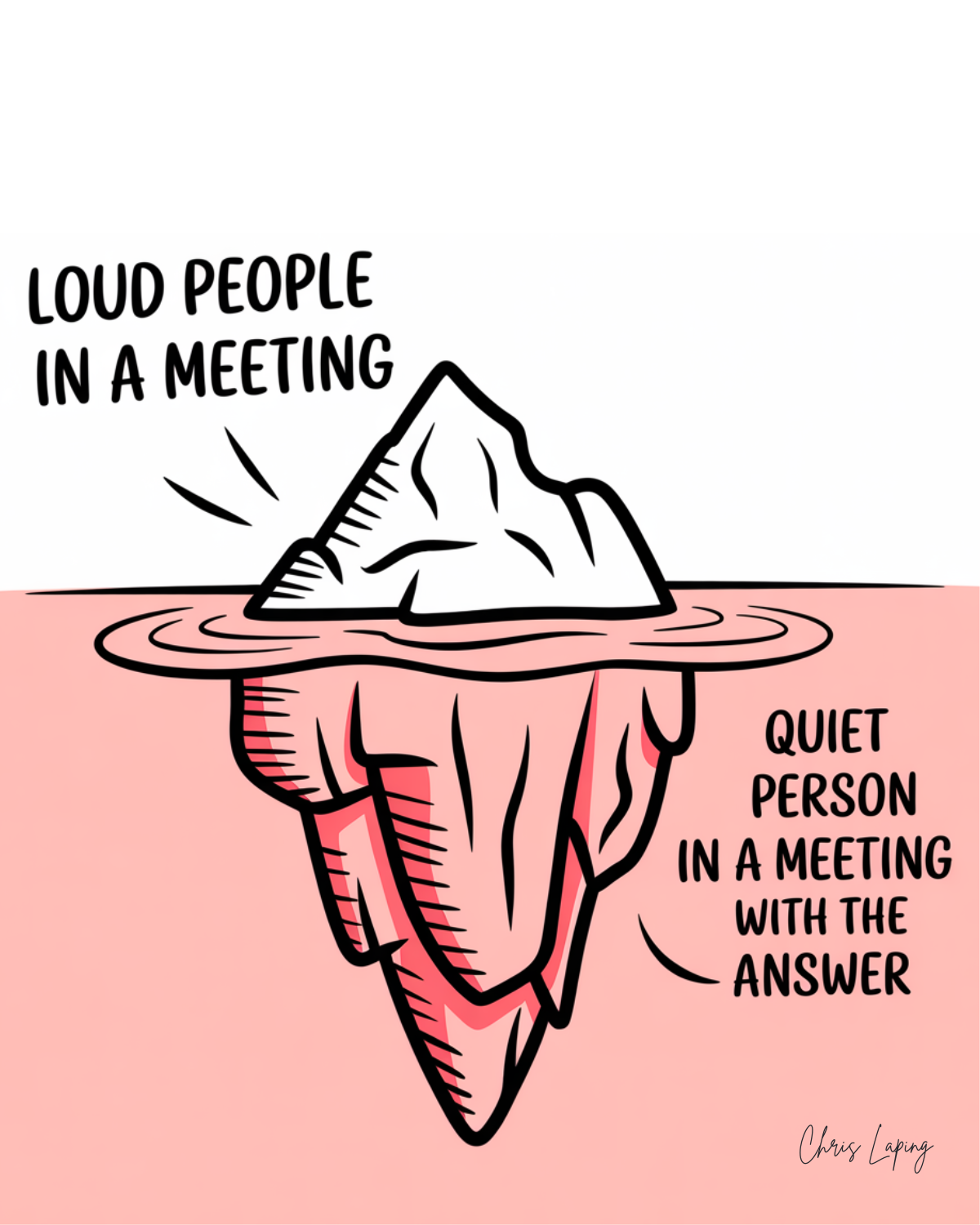
I’ve been thinking a lot about this image lately.
You know what it reminds me of? Every meeting I’ve ever sat in where the loudest person dominated the conversation while someone in the corner had the answer we desperately needed.
And nobody noticed.
Or maybe they did notice, but the social cost of interrupting the momentum felt too high. So they stayed quiet. And the team moved forward with a flawed decision that someone in that room could have prevented.
This isn’t just frustrating. It’s expensive. And it’s completely avoidable.
The Science of Silence
Back in 1972, psychologist Irving Janis coined the term “groupthink” to explain how cohesive groups can drift into terrible decisions. Not because they lack smart people. But because the desire for harmony overrides critical thinking.
Here’s what his research found: When teams prioritize consensus over truth, dissenting voices get silenced. Not by force. By social pressure.
The quiet engineer who sees the flaw? Stays silent.
The designer who spots the risk? Doesn’t speak up.
The analyst who ran the numbers differently? Keeps it to themselves.
Not because they don’t know. Because speaking up feels dangerous.
Janis studied major policy disasters—Pearl Harbor, the Bay of Pigs, Vietnam—and found the same pattern every time. Smart people in rooms making catastrophic decisions because no one was willing to say, “Wait. I think we’re wrong about this.”
The research shows that when groups face high stress, have directive leadership, and are insulated from outside opinions, they develop a consensus-seeking mentality that stifles critical thinking. They convince themselves of their invulnerability. They rationalize away concerns. They self-censor.
And the iceberg grows beneath the surface while everyone talks about what’s visible above the waterline.
This Is Where Emotional Intelligence Matters
Leaders with high EQ notice the hesitation. They read the room beyond words. They create psychological safety. Not as a buzzword, but as a practice.
They notice who almost speaks, then stops.
They ask directly: “What am I missing here?”
They validate concerns before moving forward.
This isn’t about being “nice.” It’s about being effective. Because the best decision in your next meeting might come from the person who hasn’t spoken yet.
Try This
1. Notice the near-miss contributions.
Watch body language. Someone leaning forward, then pulling back. Someone opening their mouth, then closing it. That’s your signal. Stop the meeting and say, “Hold on. Sarah, you looked like you had something to add.”
2. Ask what you’re missing.
Don’t assume silence equals agreement. Directly invite dissent: “What am I not seeing here?” or “What would make this idea better?” or “If you were placing a bet with your own money, would you?”
3. Validate before you move forward.
When someone raises a concern, don’t defend. Don’t explain. Don’t justify. First, acknowledge: “That’s a really important point. Help me understand more about what you’re seeing.”
4. Design meetings that invite contribution, not performance.
Conference rooms with PowerPoint slides feel like classrooms. That’s not collaboration. That’s presentation. Go for a walk instead. Stand side-by-side at a whiteboard. Meet over coffee with laptops closed.
5. Close the loop visibly.
When someone shares input, circle back. “You said ___, so I changed ___.” This tells everyone: Your voice matters here. Speaking up isn’t risky. It’s valued.
The Trap We Fall Into
Most of us don’t mean to silence people. We genuinely believe we’re being collaborative.
But here’s what actually happens: We ask questions not to learn, but to set up our next point. We nod, but we’re crafting our rebuttal. We say “tell me more” while secretly thinking “let me tell you.”
And people can tell.
After a while, they stop trying. They learn to tell you only what you want to hear. Or nothing at all.
Then we complain: “Why isn’t anyone speaking up?”
What Helps You Beneath The Surface?
I’m genuinely curious about this. What do you do to make sure the quiet voices get heard? What signals do you watch for? What practices have you built?
Because here’s what I know after thirty years of coaching leaders: The people who build the most trusted influence aren’t the ones with the best answers.
They’re the ones who make space for better questions.
Your Unignorable Move
In your next meeting, watch for the person who starts to speak, then stops. Don’t let that moment pass. Pause the conversation and invite them in: “Hold on… what were you about to say?”
That one move could change everything.
Your coach,
Chris
P.S. If you want to dive deeper into the psychology of high-trust influence, my book Unignorable breaks down the five behaviors that separate high performance from high-impact. Join the waitlist here.