You can fake enthusiasm. You can't fake this.
Read time: 4 minutes / Subscribe to this newsletter
Hello Friend,
Your best idea wasn’t a product of your intelligence.
It was a product of your attention. Read that again.
The thing you saw that everyone else walked past. The problem nobody had named yet. The quiet person in the meeting who turned out to have the answer.
You didn’t think your way to those. You noticed your way to them.
In Deep Work, Cal Newport argues that in an information economy, your value is set by the quality of your ideas. And when he traces the thinkers whose ideas outlived them by generations, the same habit kept surfacing. They protected long stretches of thinking. They gave themselves room to notice.
Here’s what Newport doesn’t say, and what I’ve watched play out in coaching rooms for years.
Noticing doesn’t only make your ideas better. It makes you more trusted.
Because attention is the one proof of value that can’t be manufactured. You can fake enthusiasm. You can fake agreement. You cannot fake noticing. People know within seconds whether they’re being listened to or waited out.
You don’t have to be the loudest person in the room in order to be taken seriously.
You have to be the one who notices.
The barefoot man on the couch
In 1993, Johnny Cash was 61 and considered finished. His label had dropped him. He was playing dinner theaters.
Rick Rubin was thirty years younger. A music producer who had built his name on hip-hop and metal, working with young artists on their first or second album. He was not a musician. He was not an obvious fit.
They met in a bar in Santa Ana. Cash sized him up and cut straight to it: “What are you going to do with me that nobody else has done?”
Rubin didn’t answer with a pitch. He answered with how he showed up once the work began.
He said, “Well, I don’t know that we will sell records. I would like you to sit in my living room with a guitar and two microphones and just sing to your heart’s content, everything you’ve ever wanted to record.”
Johnny answered with four words. “Sounds good to me.”
So Cash sat in Rick Rubin’s living room and played old country and folk songs. Most of them, Rubin had never heard.
And Rubin sat on the couch. Barefoot. Listening. No suggestions about making it radio-friendly. No pressure to sound younger or more relevant. For the first sessions, he didn’t even turn on the recording equipment.
He asked simple things. What’s important to you about your music? What do you love?
Then he shut up and listened. For days.
American Recordings was Johnny Cash’s 81st album. It began a ten-year resurgence, six albums, two gold, two platinum, and his first U.S. number one in thirty-seven years.
Rubin didn’t out-produce anyone. He out-noticed everyone.
That’s the fifth influence behavior in my forthcoming book, Unignorable: The Science of Being Taken Seriously. “Be a Serial Wonderer.” It sounds like a soft one. Honestly, it’s the hardest one.
Noticing comes in two forms
Existential curiosity is upstream. It’s the willingness to ask why things are the way they are, and whether they have to be. Before Rubin ever met Cash, his version was one question: Who is the best adult artist not doing their best work? That question prompted him to rediscover Johnny Cash.
External curiosity is relational. It’s noticing that someone went quiet in the meeting and checking on them after. It’s asking for input and actually hearing what comes back.
One notices problems. One notices people. You need both.
Most of us are mediocre at the second and completely absent from the first.
Existential curiosity requires a calendar
This is the part nobody wants to hear. Noticing takes time, and time has to be taken. You’ll never find it. You have to create it.
I call it a “wonder session.” Thirty minutes. A physical notebook, not a laptop. One question you actually want to explore. Not a task list. Not email. Wondering.
Here’s what surprised me as I studied curiosity.
Wonder sessions don’t just sharpen your ideas. They build your trust with people who never sat in the room.
Because when you slow down enough to name the problem your CFO has been quietly worried about for a year, you aren’t showing off. You’re showing her you were paying attention when nobody asked you to.
Naming a problem someone already feels is the fastest trust you will ever build.
External curiosity requires a receipt
Asking is only half of it.
A CEO once told me something that has stuck with me for years. “Most people think the worst thing someone can do is not ask others for feedback. But the worst thing is asking for feedback and then proceeding to do nothing about it.”
He’s right. Asking creates an expectation. Ignoring the answer creates a negative story about you and your intentions.
Noticing what someone tells you isn’t the finish line. Taking demonstrable action is.
Five ways to practice this week
1. Book the wondering. Try this: Thirty minutes on the calendar. Open with a question, not an agenda. Write by hand. Be okay with the fact that you might end the time with more questions than answers. It’s a sign you’re on the right track.
2. Follow the quiet. Try this: Message the person who went quiet in a meeting. Not “any thoughts?” Try, “I noticed you were quiet in the meeting today. Is everything okay? Was there something you really wanted to say but couldn’t?” Then wait.
3. Ask questions you don’t have answers to and pause a beat. Try this: Count to five after asking a question. Give the internal processors and introverts time and space to answer. Let there be awkward silence until they respond. It’s okay. They’ll be really appreciative of the space you provided.
4. Name what bothers you. Try this: Write down the thing at work that quietly nags at you. Don’t solve it at first. Sit with it for a week. Then schedule a wonder session to explore more deeply.
5. Close the loop. Try this: After you’ve processed and incorporated other people’s feedback, be sure to circle back with them to let them know what you did with their input. Say, “You said ___, so I changed ___.” That sentence builds more trust than a quarter of good performance.
Your Unignorable Move
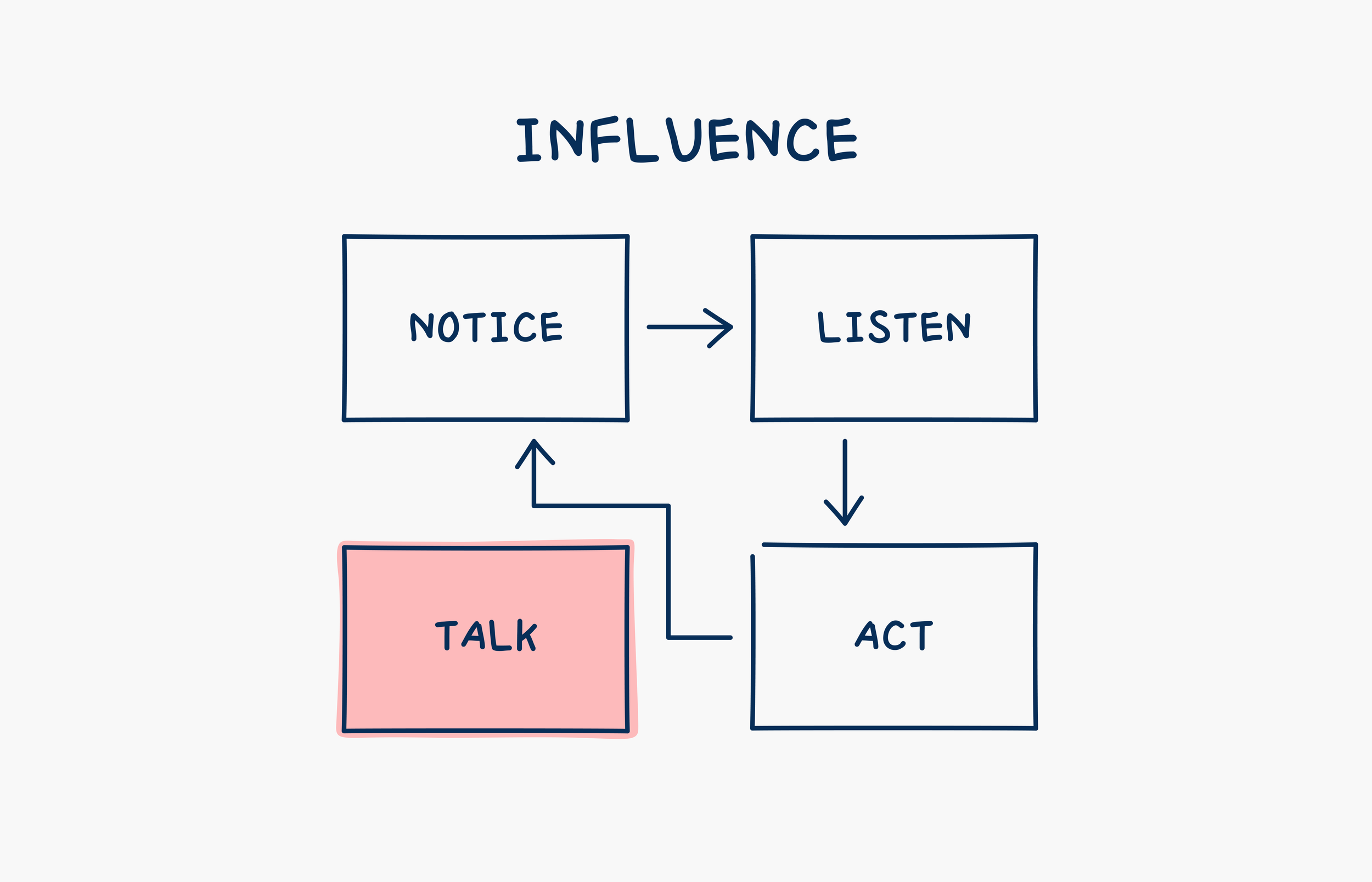
Notice before you know. Listen for meaning. Act on what you learn.
Run that rhythm long enough, and people stop experiencing you as someone trying to be interesting. They start experiencing you as someone genuinely interested.
Your coach,
Chris
P.S. Be a Serial Wonderer is one of the five behaviors I teach inside the Becoming Unignorable cohort. This is a 6-week live program for people who don’t want to be loud, play politics, or self-promote to be taken seriously. The next cohort launches soon. Join the waitlist now, and you’ll be first to know when doors open. Save your spot here.