Read time: 4 minutes / Subscribe to this newsletter
Hello Friend!
Three people I know should be worried right now.
They’re not.
All three work in industries that are busy handing it over to AI. The exact tasks they were known for are going, or already gone. On paper, they’re the ones who should be updating their résumés.
Instead, they’re calm.
Self-assured in a way that’s almost strange to be around while everyone else braces for impact.
For a while I assumed it was because they were the best at what they do.
That’s not it.
It’s the way people experience them at work. The people around them have decided they can’t do without them. So the tasks may move to a machine. For these three, it won’t.
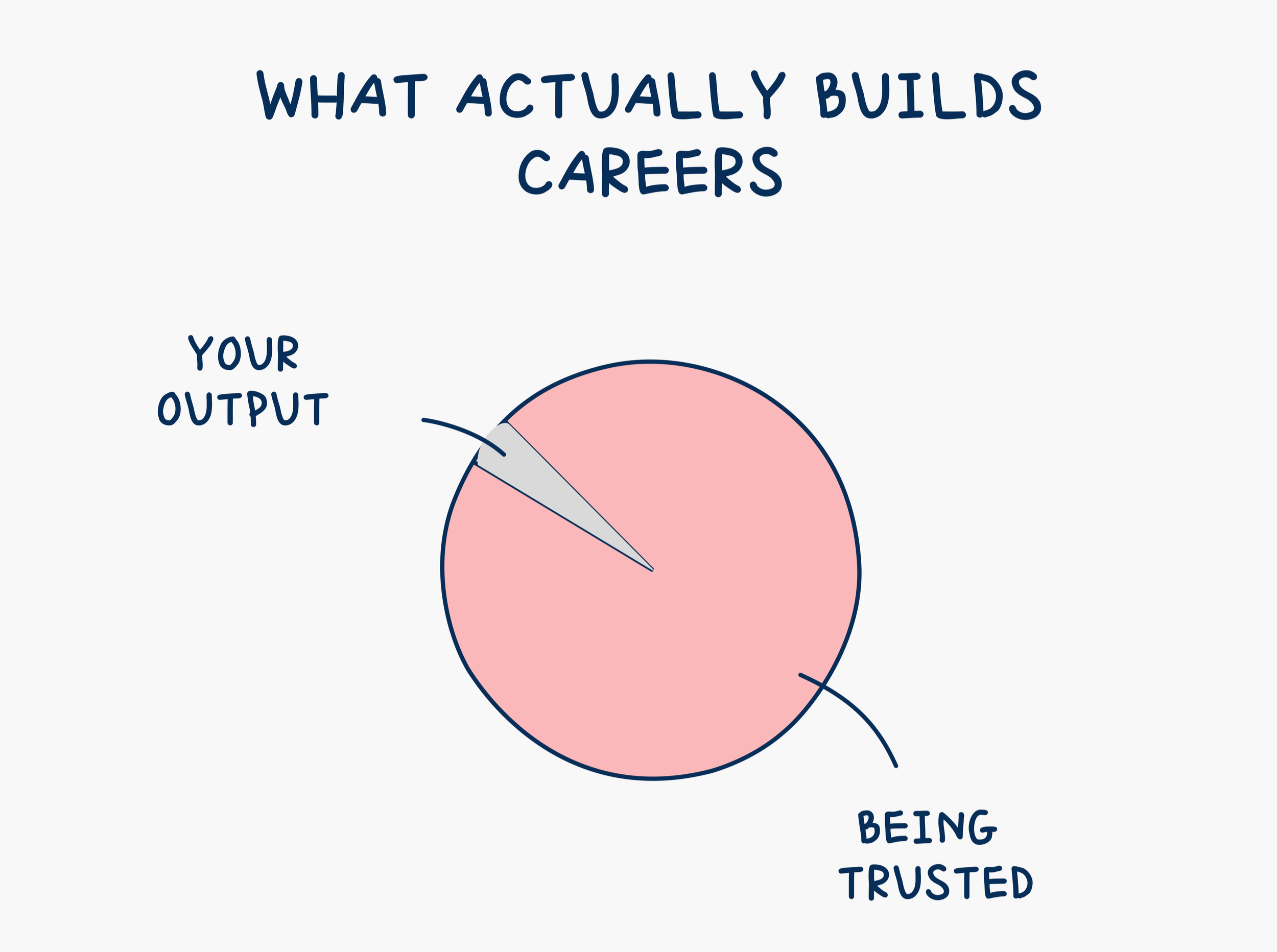
Here’s a trap almost everyone else is falling into right now. The popular advice goes like this: AI makes average work worthless, so get so good at your craft that you can’t be replaced. It sounds right. Or even responsible.
It’s aimed at the wrong target.
Because “good” is exactly what AI is coming for. Good can be studied, copied, automated. If your whole moat is the quality of the output, you’re competing with a tool that gets cheaper and better every ninety days.
In my forthcoming book, Unignorable: The Science of Being Taken Seriously, I write about two questions people ask about you, usually without realizing it.
Does this person know what they’re doing? And, do I trust them?
The first one is competence. You can put it on a résumé. And now, more and more, you can get it from a machine.
The second one is trust. Trust isn’t a credential. It’s something people feel when they work with you. It shows up in whether you make their day easier or harder. Whether you listen or just wait to talk. Whether they walk away thinking, I want more of that person.
Competence gets you considered. Trust gets you chosen.
AI can be competent. AI cannot be trusted the way a person is trusted.
It can’t listen until someone feels heard and understood. It can’t move a nervous client from rattled to steady. It can’t be the reason a team stays loyal when the org chart gets ugly.
None of those are competence problems. They’re trust behaviors. And trust is still human work.
Your move this week isn’t to get better at your craft. It’s to focus on how people experience you when they’re trying to get your help.
Five evidence-based behaviors will accelerate that.
And if you want to actually master them with real feedback, alongside people navigating the exact same thing… that’s why I built Becoming Unignorable.
It’s a cohort designed to help you get heard, trusted, and followed at work. Not by being louder, playing politics, or self-promoting.
But with real tools that you can immediately apply that honor who you really are and don’t force you to be someone you’re not.
We kick off September 9th. And it’s a remarkably low-cost investment for what it changes: being taken seriously has a funny way of turning into bigger opportunities.
Y’all, this is going to be fun. Our first cohort was a lively group that got practical tools and tactics right away to change how other people experience them at work.
Grab your seat here.
If you’re unsure that you need something like this, I created the Are You Unignorable scorecard, which will give you some immediate feedback and tips & tricks for building trust and unignorable influence.
Your coach, Chris