Read time: 4 minutes / Subscribe to this newsletter
Hello Friend!
You shouldn’t have to become louder in order to be taken seriously.
But that’s exactly what one of my new coaching clients was told to do.
I’ll call her Dana.
In her annual review, her boss wrote that she needed to “speak up more in meetings.” One line. No coaching. No context.
Just an indictment she carried out the door and ruminated on for months.
When we started working together, I had her take the 16Personalities assessment, as I do with everyone. The result didn’t surprise her. She’s highly introverted. She processes before she speaks. She likes to hold an idea, turn it around, and understand it fully before she says a word.
Here’s the thing. I don’t blame her boss. He’s genuinely brilliant at what he does, a real expert in his function. But being an expert in your craft and understanding how human behavior works are two very different things.
And his advice, however well-meaning, did more harm than good.
Because “just speak up” rests on a myth. The myth is that being loud and visible is the same as being credible. It isn’t.
Not even close.
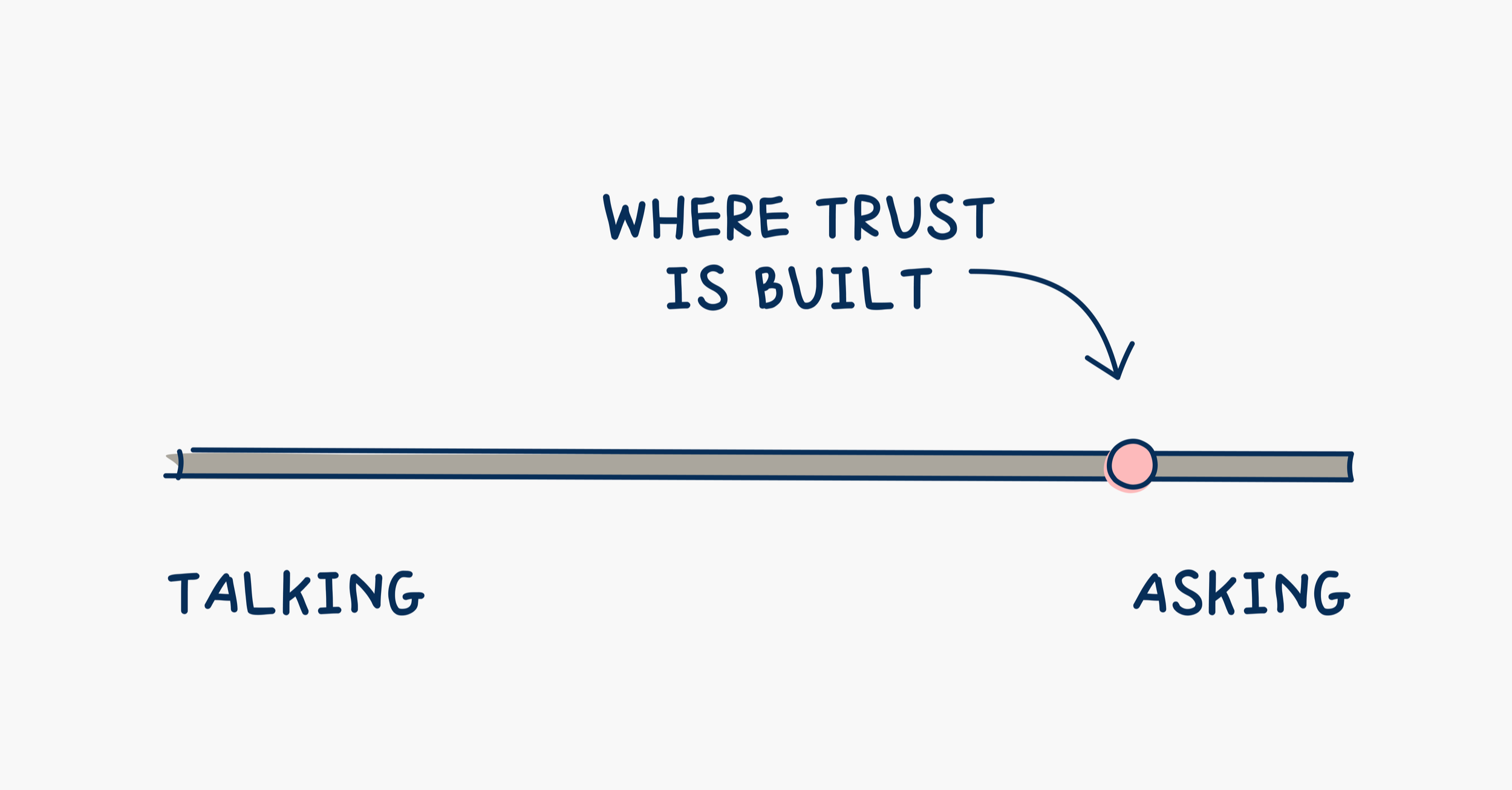
Deliberately talking more doesn’t build influence. Trust builds influence. And here’s the part that changes everything for a quiet, thoughtful person: trust doesn’t need a loud voice.
What it needs is curiosity. Curiosity is care. When you’re genuinely curious about another person, you’re telling them: I see you. I value you. I want to understand you. That’s the foundation of trust, and it has nothing to do with volume.
There are two kinds of curiosity, and the difference matters here.
Existential curiosity is your inner openness to explore, reflect, and wonder why things are the way they are. It looks upstream, beyond the obvious, to sense what’s possible before others can see it. It’s the curiosity of noticing.
External curiosity is different. It’s relational and interpersonal. It’s the kind that shows up in conversation. It’s the way we ask, listen, and respond. It builds trust, reveals insight, and turns relationships into mirrors for truth.
That second one was Dana’s superpower, and she didn't even know it.
Here’s what I coached her on. You can “speak up” without ever forcing an opinion into a gap before you’re ready. You speak up by asking a question out loud.
Introverts don’t need to insert a hot take before they’ve processed the room. That’s not their game, and pretending otherwise reads as forced.
But a good question? A real one? That lands. It signals you’re paying attention. It pulls the thread everyone else missed. It makes you the person who moves the conversation forward instead of the person performing for it.
Asking is speaking up. It just builds trust instead of noise.
Dana stopped trying to be louder. She started being the one who asked the question no one else thought to ask. Within a few weeks, people were turning to her in meetings. Not because she got louder. Because they trusted her.
And the punchline: her boss actually commented, “Thank you for speaking up more.”
So I’m curious about you.
Has a boss ever handed you feedback that didn’t sit right? Something that felt misaligned with who you actually are?
Reply and tell me about it. I read every response.
Your coach,
Chris
P.S. I just opened something new that I’m super excited about: Private coaching with pay-what-you-can pricing. It’s one-on-one help to get you heard, trusted, and followed, and I’ve set the fee up like a tip jar. You decide what the work was worth. If you’ve been carrying feedback like “speak up more” and you’re ready to turn it into something that actually fits who you are, start here.