Why do smart, capable people get overlooked?
Read time: 4 minutes / Subscribe to this newsletter
Hello Friend!
I’ve been trying to solve a puzzling mystery since I began researching my forthcoming book 10 years ago.
Why do smart, capable people get overlooked?
It started during my speaking tour for my first book, People Before Things. I kept reliving the same conversation with thousands of people in one-to-one moments after my keynote talks.
I would hear things like:
“I share my thoughts, and no one seems to care, but when others say the exact same thing, suddenly it’s a brilliant idea.”
Or…
“People nod their heads and act like they’re on board, but when we leave the room, nothing happens.”
Or…
“I’m always the last to know about big changes.”
I think we’ve all been there at some point in our careers, and it’s utterly frustrating. We know we can add value. We know we have something important to say. We know we can fix a problem that seems complicated to other people but seems really simple to us.
But we don’t have a willing and interested audience, and our ideas fall flat.
I couldn’t let these conversations and questions slide. It’s not my nature. When I know people I care about are struggling with a problem, I go all in on finding the answer.
The research took me down many rabbit holes with plenty of plot twists and counterintuitive truths.
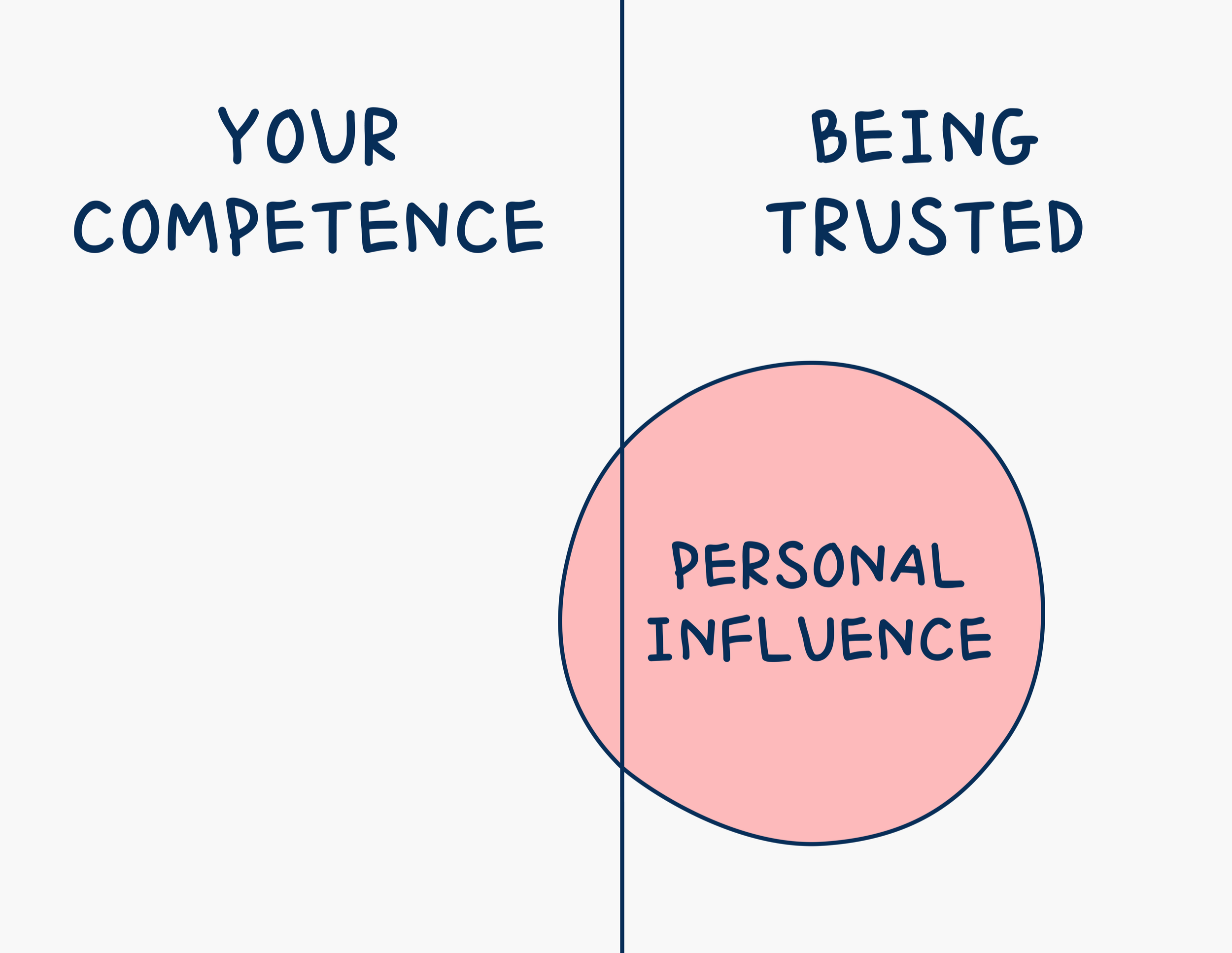
Here’s the one data point that matters most: it’s not about your intelligence and capability. It’s about how people experience you.
Most of us think our credentials, degrees, certifications, title, and tenure (or lack thereof) determine whether we have any personal influence in our organizations or with our customers.
But science has shown that trust determines whether anyone will take us and our ideas seriously.
This isn’t about predictable trust either. Meaning, “I can trust Chris will be on time to meetings.” Or, “I can trust that Chris will get the task done.”
Instead, it’s about relational trust. “Chris makes my life easier when I work with him.” Or, “Chris really listens to me and notices things that others don’t.”
I make it sound simple. Because it is. But it requires us to look deeply and objectively at the way we’re showing up and what people have to do to get our help. However, it gets hard when we ignore that.
When we assume someone didn’t invite us to a meeting because of the politics. Or because they were clueless about who the real expert was.
It’s safer and more comfortable to do that. To blame others because it’s something they need to change… not us.
I want to challenge you this week to not fall into that trap. Because it will land you in career purgatory with no growth.
Instead, take inventory of all your interactions this week and how people are truly experiencing you. It matters more than your title. Or your credentials. Or your tenure.
Your coach,
Chris
P.S. Want to know exactly which behaviors in your circle of control might be costing you influence and credibility right now? That is what the Are You Unignorable scorecard is built to show you. You’ll get instant results: a PDF emailed to you with specific tactics you can control and implement beginning today. It’s free. And it’s yours. Click here to get started!